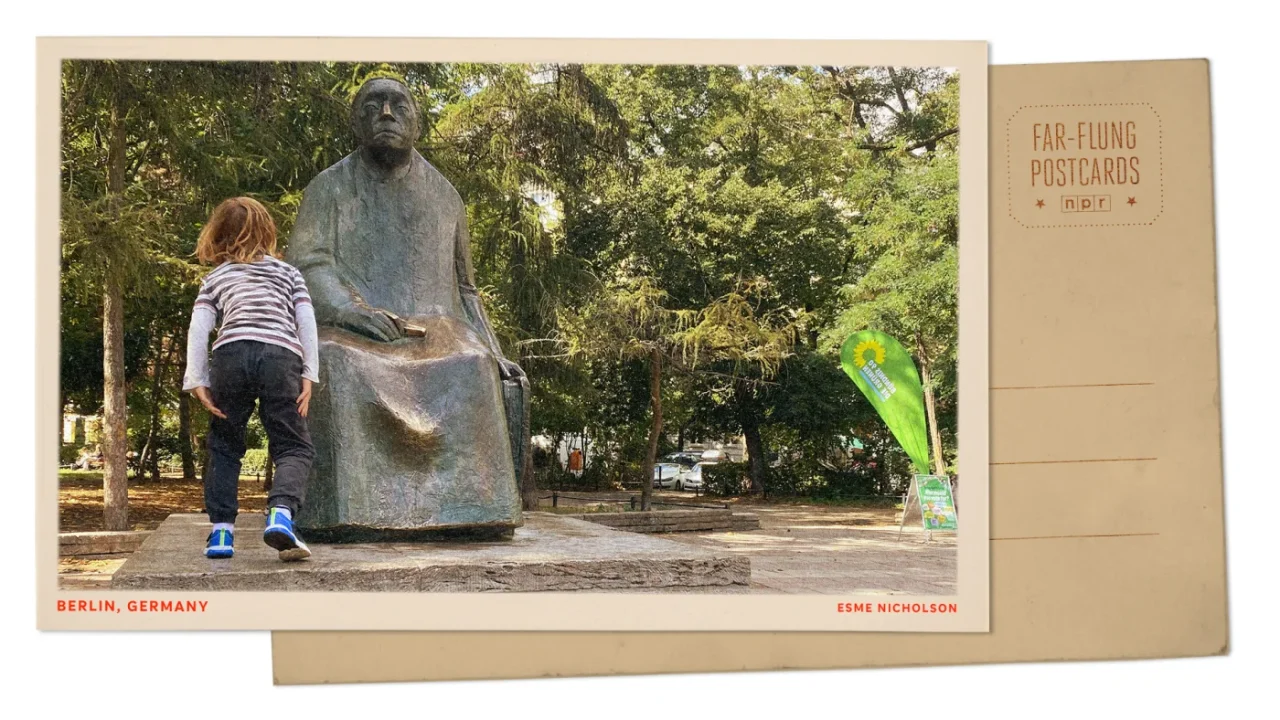
In Kollwitzplatz, a Berlin square named after the German expressionist artist Käthe Kollwitz, a bronze statue of the creator sits calmly amid the lively energy of a public playground. Children swing, slide, and run around the monument, their joyful noise contrasting with the stillness of the artist’s depiction. Kollwitz lived just off this square and her own children likely played in the area during the turn of the 20th century.
The square serves as a tribute to Kollwitz, whose lithographs, woodcuts, and sculptures often explored themes of suffering and the futility of war following World War I. Her work frequently depicted undernourished children and mothers burdened by anguish. Her renowned sculpture, ‘The Grieving Parents,’ stands in Belgium, commemorating the death of her son Peter, who was killed in the front lines at the age of 18.
During a recent visit, the statue became an interactive part of the playground. Young boys were seen using the plinth to hide during games of hide-and-seek, occasionally encircling the figure in a manner reminiscent of the protective embraces found in Kollwitz’s lithographs. The artist is portrayed seated, holding a charcoal, appearing poised to capture the scene. The image of children playing safely under the statue’s watchful eye stands in stark contrast to the reality of recent conflicts and the decision by Germany to reinstate military service for a new generation.

Berlin still has these unique spots. Kollwitzplatz feels like a secret garden for kids.
Hiding from a bronze statue? I think the artist would approve of the imagination.
Sad that her son died in the war, but the square preserves her legacy well.
My daughter loves it there. The charcoal detail on the statue is really impressive up close.
Käthe’s art was so raw. Seeing her statue in a playful light is surprising.
Restoring military service makes me uneasy. The irony of peace near Kollwitz is thick.
Do the local residents complain about the noise, or is it just a beloved neighborhood spot?
I remember hiding behind that plinth when I was five. Nostalgic for old Berlin.
The contrast between her war themes and kids playing is powerful. It feels like hope.