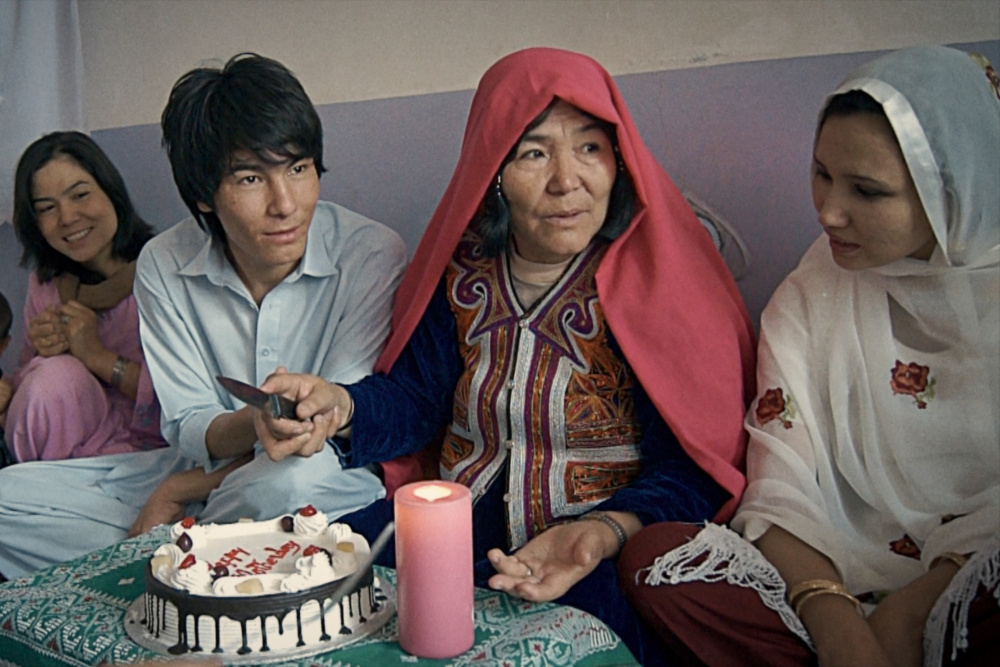
Khadim Dai’s debut feature-length documentary, “Hazara Town,” presents a restrained yet emotionally resonant portrait of an Afghan refugee family living in a state of limbo within the Pakistani city of Quetta. The film focuses on the director’s own displaced relatives, who are currently awaiting asylum in Canada, highlighting the complex reality of life in a place described as an “in-between” existence.
Set in the Hazara Town district, which is home to over 500,000 residents of the ethnic Hazara community, the documentary captures a setting where dust and parched beige dominate the landscape. The film centers on Dai’s sister-in-law, Sedeqa; their two young nieces, Machid and Mitra; and their grandparents. While Dai’s brother, Hussain, has already secured a path to Canada, the remaining family members remain stuck in a waiting process that is slow and selective, leaving them in a state of permanent uncertainty.
Returning to Pakistan years after his own departure, Dai embeds himself in his family’s household to film their daily routines. The camera documents the growing separation between the children and their father, whose presence is maintained only through phone and video calls. Beyond the domestic sphere, the film explores the wider currents of fear within the Hazara community, where residents face increasing insecurity from ethnic and religious persecution. The documentary notes that targeted killings have become commonplace, a reality underscored by the film’s focus on the local cemetery, where the dead are buried with minimal ceremony.
Despite the surrounding danger, the home serves as the most secure space for the family, a place turned inward with few windows to the outside world. Educational opportunities for the children are constrained as Pakistan has handed over responsibility for refugee education to the Taliban, forcing the girls to develop their personalities within the cramped confines of their residence. Machid, a devoted reader of Judy Blume, dreams of opportunities in the United States, while the family’s collective hopes remain pinned on Canada.
As family members gradually depart for North America, Dai captures the farewells with a sensitivity that elevates the film beyond a simple diary. The documentary serves as a statement of presence for lives that are often dismissed as statistics, offering a momentary interlude of reunion before the family is pulled in multiple directions by the inevitable movements of displacement.



The dust and beige aesthetic sounds visually striking. I am curious how the cinematography captures that mood.
Do you know when this will be released in theaters? I need to see this documented experience.
It is good to see a film that treats refugees as people rather than just statistics. Powerful.
Minimal ceremonies for the dead say so much about the fear that grips that entire community.
I have not heard of Hazara Town being filmed this way before. Definitely adding this to my watchlist.
The waiting process for asylum is notoriously slow. It is truly tragic how many families get stuck in limbo.
Khadim Dai’s perspective as family makes this documentary feel incredibly intimate and personal. I love that.
Why is Pakistan handing refugee education to the Taliban? That seems like a massive step backward for those girls.
The image of the children reading Judy Blume amidst so much danger is heartbreaking yet hopeful.