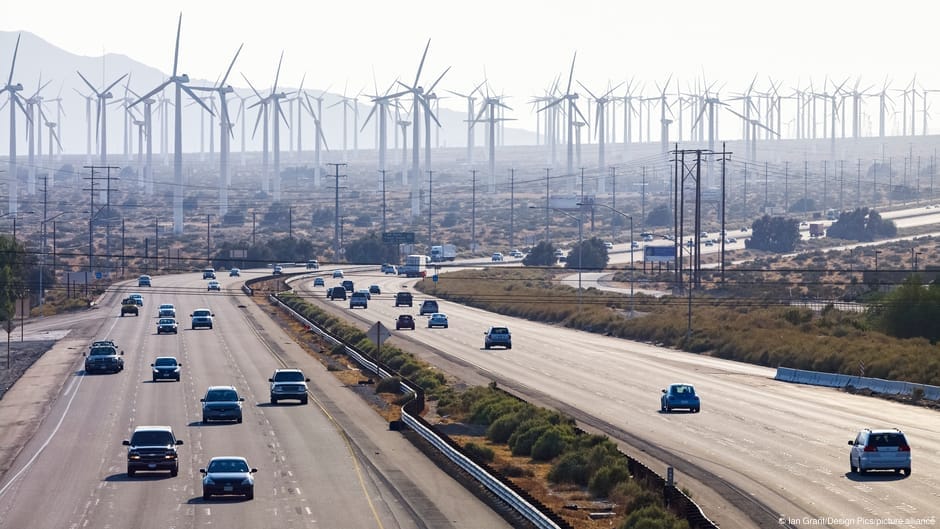
As Earth breaches multiple planetary boundaries, including climate change and biodiversity loss, the sustainability of current economic models is under intense scrutiny. The prevailing solution proposed by many is “green growth,” a strategy that aims to maintain economic expansion while simultaneously reducing emissions and resource consumption through the adoption of renewable energy, recycling, and energy-efficient technologies. Helmut Haberl, a social ecology professor at BOKU University in Vienna, described the core concept as continuing “business as usual” but with the integration of more sustainable technologies.
Research indicates that this decoupling of growth from emissions is possible in principle. Data from the United Kingdom, the United States, Japan, and Australia shows periods of economic growth coinciding with falling CO2 emissions, even when offshored production is accounted for. Similarly, the European Union’s economy has grown by over 70% since 1990, while its carbon emissions have dropped by approximately 40%. However, Haberl and his colleagues note that complete decoupling remains rare globally. In developing regions such as India and parts of Southeast Asia, economic efficiency may be improving, but total emissions are still rising, a trend incompatible with preventing severe climate impacts.
Furthermore, reducing emissions is not the only challenge; high resource consumption poses a significant barrier. While green technologies improve manufacturing efficiency, the “rebound effect” often negates these savings by lowering costs, which in turn encourages higher production and consumption. For instance, although the UK has improved efficiency and reduced emissions, its resource usage in 2023 was 7% higher than in 2001. Global resource consumption has tripled in the last half-century and could increase by another 60% by 2060 if current trajectories continue.
Given these hurdles, some researchers advocate for “degrowth,” a framework suggesting that unlimited economic expansion is unsustainable. This approach proposes slower, zero, or negative growth in wealthy nations to allow ecosystems to recover, while allowing poorer countries to grow until their standards of living improve. Proponents argue that prosperity should be measured by quality of life, education, and community well-being rather than Gross Domestic Product (GDP). A 2020 study supported this view, suggesting that high quality of life need not be sacrificed for lower consumption.
However, the transition is complex. The European Environment Agency warns that economic stability is deeply tied to growth in job markets and tax systems. The agency notes that while GDP growth has been environmentally harmful, declining GDP does not automatically benefit the environment. Achieving an environmentally friendly economy may require an unprecedented shift in how societies define and measure prosperity, moving beyond simple material output to ensure both social justice and ecological sustainability.


The EU data is encouraging, but relying on offshoring is just moving the problem, not solving it.
How do we implement degrowth without causing immediate job losses? The transition seems politically impossible to manage.
Degrowth sounds like an extreme idea now, but the rebound effect makes me doubt green growth can ever catch up.