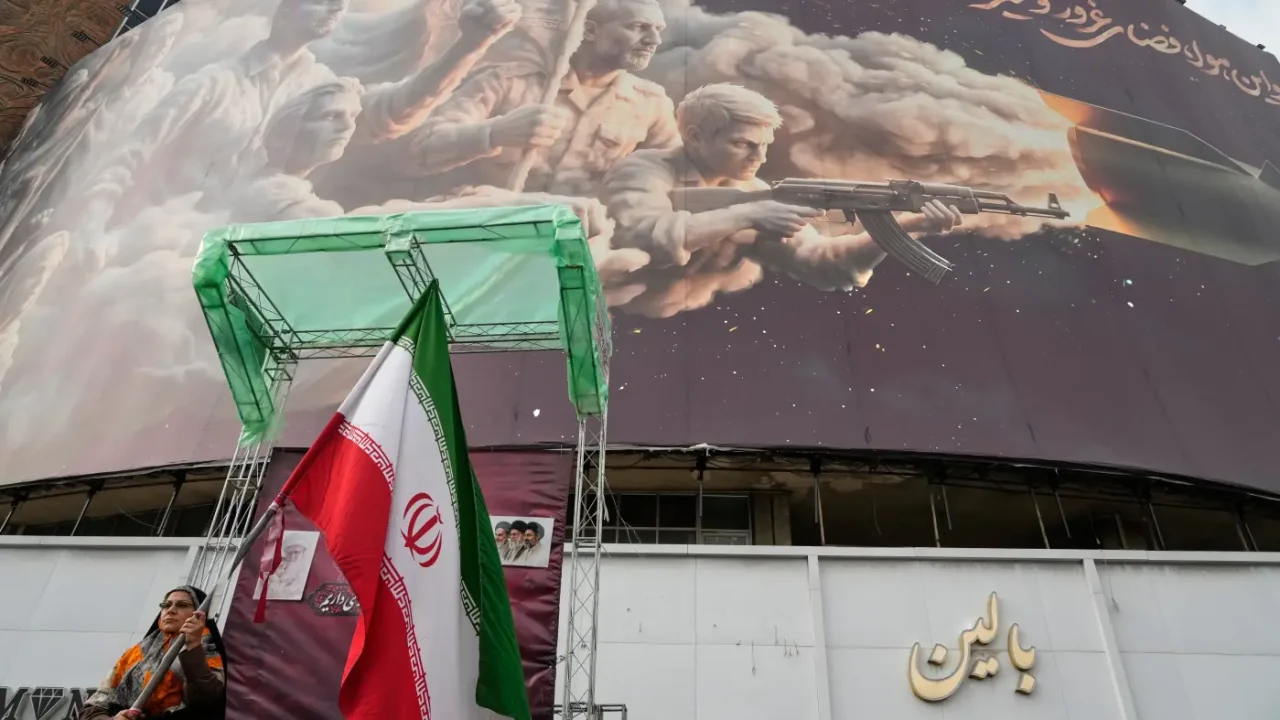
Iran launched a new drone attack on a U.S. early warning radar facility in Bahrain on Tuesday, marking the third consecutive strike on American military targets in the Gulf state in recent days.
Bahrain’s authorities stated that air defense systems successfully intercepted the “treacherous Iranian aerial attacks.” The U.S. military confirmed that no American personnel were injured and no equipment was damaged by the projectiles.
The strikes come after a period of roughly two months with limited direct fighting. Regional governments, including Egypt, Qatar, Saudi Arabia, and the United Arab Emirates, condemned the latest attacks, labeling them a violation of Bahraini sovereignty and a threat to regional stability.
Analysts suggest the escalation reflects growing economic pressure on Tehran, which has been under a U.S.-enforced naval blockade in the Strait of Hormuz since the war began on Feb. 28. Hamidreza Azizi, a senior Iran analyst at the International Crisis Group, noted that the risk of renewed war now depends on whether Tehran determines that the costs of continued restraint exceed the risks of escalation.
In response to the heightened tensions, the United States has expanded its naval footprint in the Middle East. The arrival of the USS Theodore Roosevelt carrier strike group means there are now three aircraft carriers in the region, joining the USS George H.W. Bush and the USS George Washington. According to the Institute for National Security Studies, this deployment provides greater offensive firepower and missile interception capacity than the force initially present when the conflict started.
Despite the military buildup, U.S. President Donald Trump has indicated that new large-scale strikes are unlikely, telling Vice President JD Vance that talks are not currently needed. However, oil shipments from the Gulf have returned to near prewar levels thanks to U.S. military protection of tankers, while the blockade continues to damage the Iranian economy by restricting its crude oil exports.
Diplomatic efforts to end the conflict have stagnated. Qatar, which has been a key mediator, warned that Iran’s continued attacks undermine diplomatic progress and pose an “extremely grave danger” to the prospect of an agreement. Iranian officials have described the current situation as “no war, no peace” and signaled readiness to escalate if economic pressures continue.
Additionally, Iran and the Houthi rebels in Yemen have intensified threats to critical shipping lanes. On Tuesday, the UK Maritime Trade Operations reported that a tanker was attacked twice north of Oman, with the second strike causing a fire. Meanwhile, Houthi forces have solidified control over the Bab el-Mandeb Strait after a Saudi-backed group allied with the Yemeni government retreated over the weekend.

Funny how oil prices stayed stable. The military protection of tankers really seems to be working.
Qatar is right to worry. These attacks completely derail any chance of meaningful diplomatic progress right now.
I find it hard to believe the blockade is actually hurting Tehran. They seem quite resilient to it.
The fact that no US personnel were hurt is a relief, but the region remains incredibly volatile.
Three carriers feels excessive. Are we preparing for a full invasion or just posturing for the cameras?