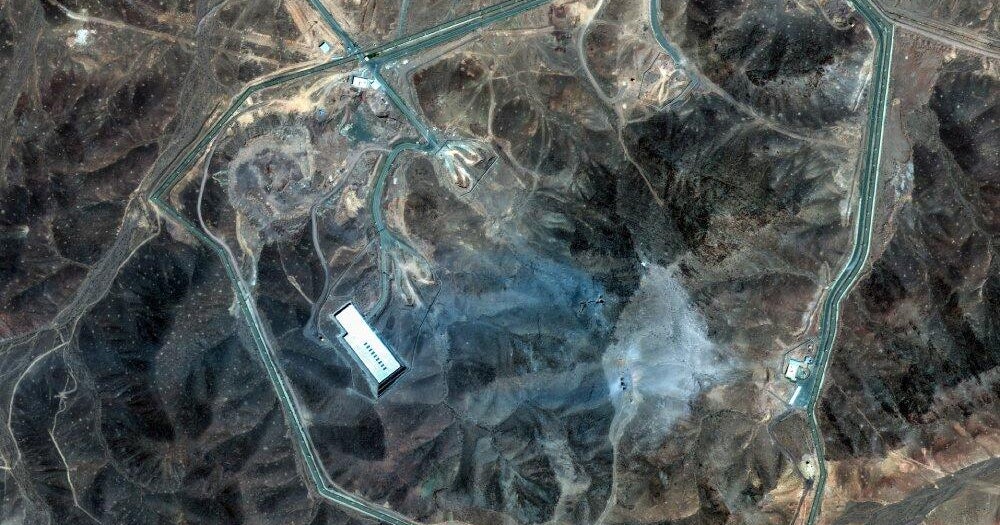
Tehran has explicitly ruled out United Nations inspections of damaged nuclear sites until the ongoing war is “permanently ended.” Iranian authorities maintain that international access to these facilities is conditional upon the complete cessation of hostilities, a stance that complicates diplomatic efforts to stabilize the region.
In a parallel move aimed at curbing regional instability, U.S. Ambassador to the United Nations Mike Waltz called on Iran-backed Hezbollah to voluntarily disarm during a visit to Lebanon. “No country can have two armies,” Waltz stated, arguing that Lebanese sovereignty must be restored through the Lebanese armed forces. Although fighting between Hezbollah and Israel has eased since summer, the issue of disarmament remains a significant hurdle for any final peace agreement between Washington and Tehran.
Tensions remain high across the Middle East, with Iraqi Prime Minister Ali al-Zaidi ordering the army to enter Jurf al-Sakher, a town approximately 40 miles south of Baghdad. The government accused the Iran-backed militia Kataib Hezbollah of controlling the area for 12 years and involved in oil smuggling. A deadline was set for the armed faction to exit the area, with military tanks and armored vehicles deployed to the outskirts, raising the prospect of direct combat between the Iraqi state and the militia.
On the economic front, global oil prices continued a downward trend despite ongoing tensions in the Persian Gulf. Brent crude fell 0.5% to $95.34 per barrel, while U.S. diesel prices dropped below the $6-per-gallon mark for the first time since September. The International Energy Agency noted that Gulf exports recovered more rapidly than global demand, leading to a slight decrease in consumer fuel costs.
Security incidents also marked the day as a Saudi-led coalition intercepted two drones targeting Mecca and Riyadh. In response, Houthi health authorities claimed that three Yemenis, including a child, were killed in separate Saudi airstrikes in rebel-held areas. Meanwhile, France urged the European Union to impose new sanctions on Iran, citing evidence that Iranian security forces were responsible for cyberattacks that compromised refrigeration units in grocery stores across Europe.

The IEA report makes sense. Supply is recovering faster than demand, so prices are stabilizing despite the noise.
Why does everyone assume the war will end permanently? That phrase feels incredibly naive to me.
Two armies in Lebanon is a recipe for disaster. Voluntary disarmament sounds very optimistic right now.
France pushing for sanctions because of cyberattacks? That is a new angle I have not seen much discussion on.
The drone interceptions near Mecca worry me. Regional spilloff effects are becoming very dangerous quickly.
Oil prices dropping despite all this chaos? Surprising, but good for my gas bill at least.
Iraq moving against Kataib Hezbollah feels like a real turning point. Finally, the state is taking back control.
Waltz’s comments on Hezbollah are bold. I hope Lebanon actually listens instead of just protesting again.
It is concerning that Iran blocks inspections until the war ends. Transparency is crucial for trust.