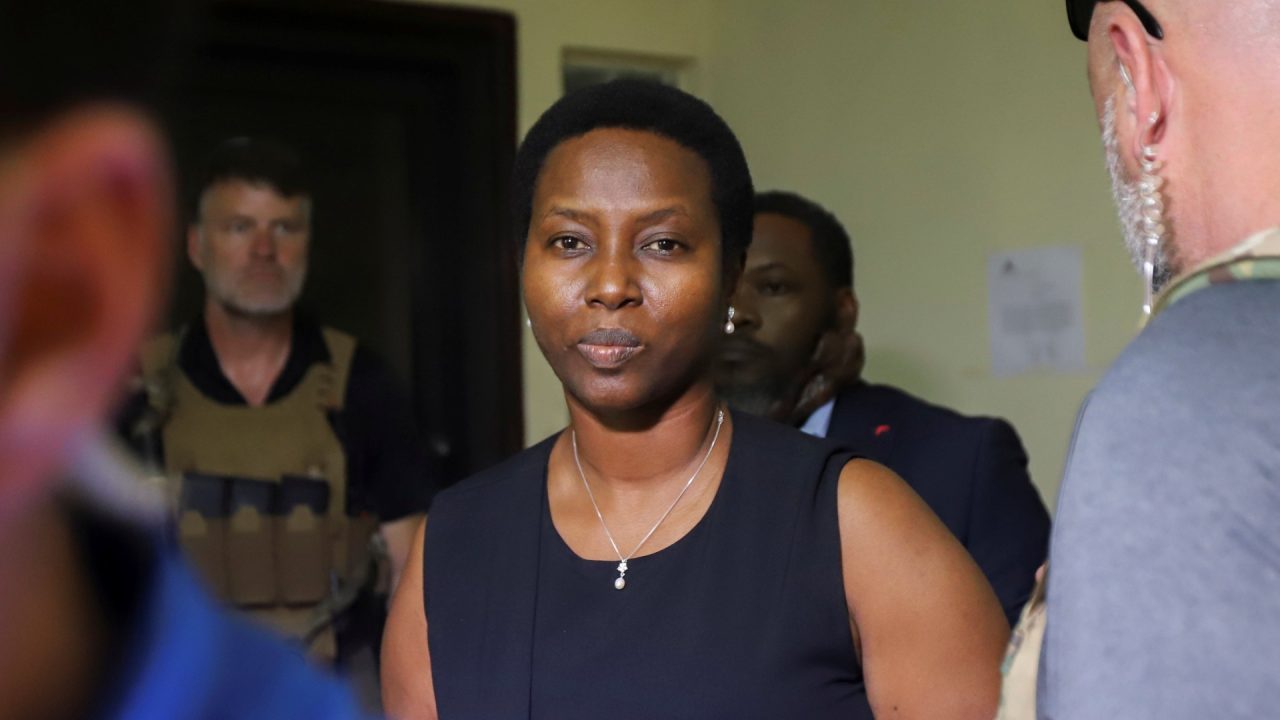
Martine Moise, the widow of Haiti’s assassinated President Jovenel Moise, has officially registered to run in the country’s first presidential election in ten years. Her name was listed on the website of the Provisional Electoral Council (CEP) on Sunday as one of 33 registered candidates. The first round of voting is scheduled for July next year, a critical step for a nation that last held a presidential election in 2016.
President Moise was shot dead in his bedroom in July 2021 by Colombian mercenaries who posed as agents of the U.S. Drug Enforcement Administration. His killing remains one of the most significant turning points in recent Haitian history. Following his death, Martine Moise suffered serious gunshot wounds and was transported to a hospital in Florida. She has served as a key witness in the ongoing legal proceedings in Miami, where dozens of suspects involved in the murder are being prosecuted.
While Martine Moise has not publicly discussed the specifics of her campaign since her registration, she took to X last week to declare that “Haiti will rise again on its own two feet, because politics needs to be done differently.” She also criticized the political opposition, stating, “They do not want the country to develop; they do not want the people to live well,” and blamed them for bringing the nation “to its knees.”
She is one of only three women among the registered candidates. Other prominent figures on the list include former Presidents Michel Martelly and Jocelerme Privert, former Prime Minister Claude Joseph, and former Foreign Minister Dominique Dupuy. Martelly and Privert face international sanctions over allegations that they have supported armed gangs, accusations both men have denied.
The political instability in Haiti has been exacerbated by the expanding influence of heavily armed gangs, which successive leaders have cited as a primary reason for repeatedly delaying elections. Gangs, widely believed to be aided by corrupt politicians, have seized control of large portions of Port-au-Prince and surrounding regions. The crisis has resulted in more than 22,000 deaths, many at the hands of security personnel, and has displaced approximately 1.5 million people.
Recent efforts to restore order have involved international military deployments. Last month, El Salvador sent troops to assist Haitian police in fighting gang influence. As part of this deployment, El Salvadoran President Nayib Bukele ordered about 2,000 soldiers to set up an operational base in the country’s main stadium. Haitian security forces recently regained control of the stadium, which had been under gang occupation for two years, an action that previously forced the national football team to play its matches elsewhere.

Haiti has been suffering for so long. I hope this time brings real stability and peace.
Only three women? That represents a huge part of the population and needs to be a bigger priority.
Will Bukele’s troops actually help, or just make things worse? I am worried about more outside interference.
It feels surreal that she is running for office while dealing with the aftermath of her husband’s murder.