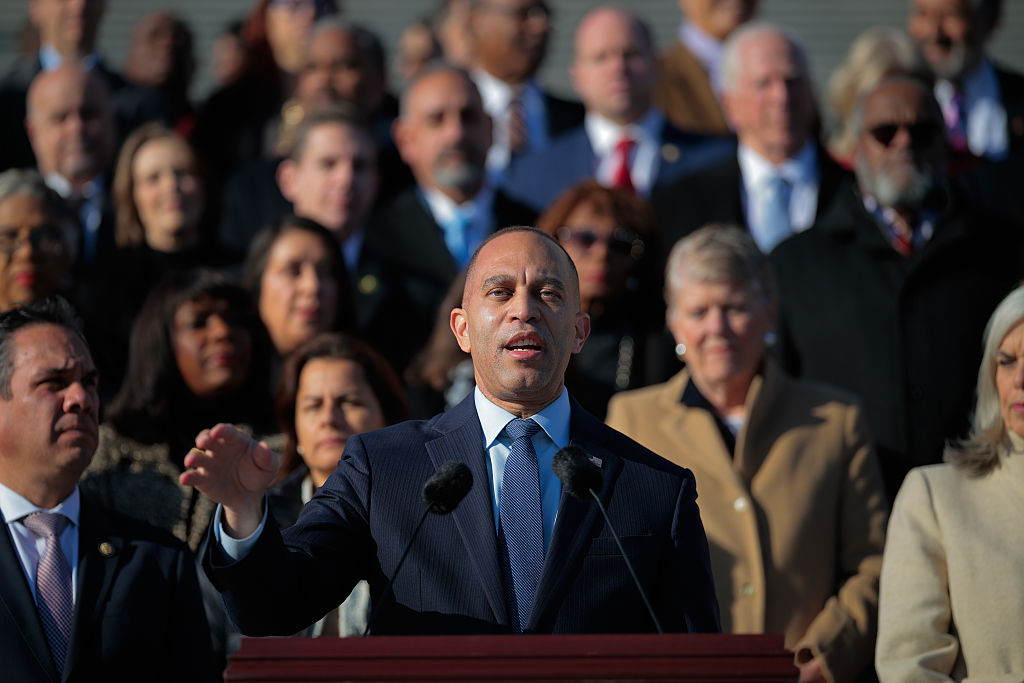
House Democrats are set to select Rep. Hakeem Jeffries of New York as the chamber’s first Black Speaker of the United States, a historic designation that marks a significant moment in American political history. While the role places Jeffries second in the presidential line of succession, leaders and colleagues emphasize that the appointment comes with substantial expectations to translate symbolic representation into tangible legislative outcomes. Jeffries will be responsible for setting the House legislative agenda and leading negotiations on federal spending, all while navigating opposition from the Trump administration.
The potential ascension echoes the racial breakthrough of Barack Obama’s election in 2008, a period that raised hopes for lasting economic and social change. However, internal dynamics within the Democratic caucus present hurdles. While Jeffries secured support from the Congressional Black Caucus and progressive leaders like Alexandria Ocasio-Cortez, some incoming progressive members remain uncommitted to his candidacy. Long-time ally Rep. Jim Clyburn, a mentor to Jeffries, advises that the Speaker must manage diverse party factions carefully, noting that the role often involves operating under intense public scrutiny without the shield of executive authority.
In a letter to colleagues released following the midterm elections, Jeffries pledged to consult with every member of the caucus and stressed that the new majority must deliver dramatic change rather than merely scoring political points. His background in the Black church is also viewed as a relevant asset for his leadership. Rev. Frederick Haynes, a newly elected Representative from Dallas, notes that Jeffries’ roots in institutions like Cornerstone Baptist Church in Brooklyn, a hub for the Civil Rights Movement, position him to bring the moral tradition of the Black community to the forefront of national governance.
Carl Heastie, the first Black Speaker of the New York State Assembly, has known Jeffries for decades and views the promotion as proof that the American dream remains viable despite current political divisions. Heastie highlights Jeffries’ previous legislative work, such as his successful 2010 effort to change how incarcerated people are counted for redistricting, a move that disproportionately affected Black communities. “Hakeem to me was always one of the finer debaters on the floor,” Heastie said. “When he debated or spoke on the bill, everybody would stop what they were doing to make sure that you listened to him.”
As Democrats prepare to take control of the House with their largest majority since the early Obama years, the focus remains on whether Jeffries can unify the party and sustain the momentum of this historic appointment into effective governance.

Great milestone, but the real test is whether he can get actual spending bills passed without getting bogged down.
Second in line for the presidency already. The pressure on his shoulders must be absolutely insane right now.
That redistricting bill back in 2010 was huge. He definitely knows how to fight for communities.
Comparing this to Obama’s 2008 win feels a bit of a stretch, doesn’t it? The political climate is totally different.
The progressive wing seems hesitant. Can he actually unify them or will the caucus tear itself apart?
His background in the Black church really stands out here. Moral leadership is something we desperately need.
History in the making again. Let’s hope he delivers results, not just symbolism for the cameras.