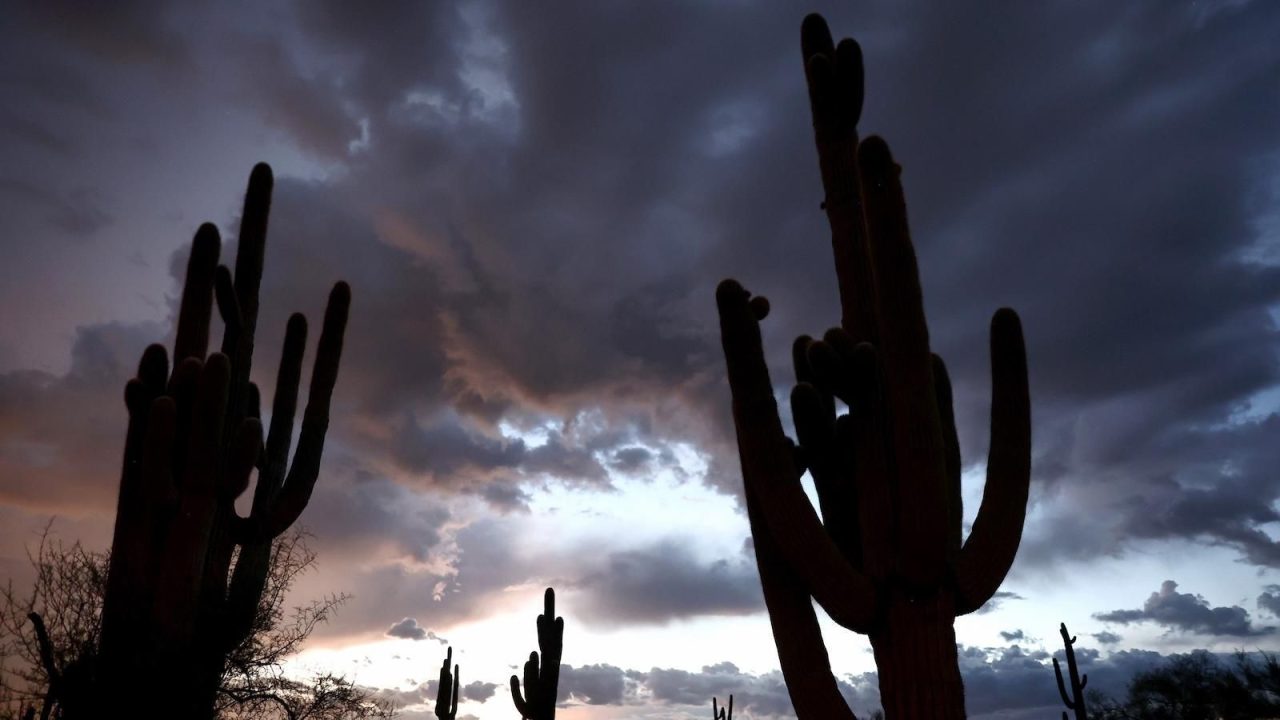
Contrary to the common perception that cacti are virtually indestructible desert plants, new research indicates that worsening droughts are pushing many species to the brink. A study published in the journal Nature models a future with not only rising temperatures but also more frequent dry spells, finding that the majority of nearly 1,000 cactus species are likely to lose significant habitat as the climate changes.
According to the findings, more than a quarter of these species could lose at least 80 percent of their habitat by the year 2100. Michiel Pillet, a conservation ecologist at the University of South Florida and the lead author of the paper, noted that while cacti are remarkably resilient, they are not immune to climate stress. “Just like other plants, they evolved under conditions that they’re used to,” Pillet said. “When you take them outside of those conditions, they might not be able to handle that.”
Cacti in regions such as the southwestern United States rely on seasonal monsoon rains, typically in July or August, to survive. Although they possess adaptations like waxy skin to retain moisture, the combination of rising global temperatures and intensified dry spells is creating stress similar to dehydration and heat illness in humans. “When we consider drought conditions, then it turns out that they’re much, much sicker than we previously thought,” Pillet explained, adding that these results alter the outlook for cacti and potentially other plant groups facing climate change.
Instead of relying solely on future projections, the researchers utilized data from the citizen science platform iNaturalist. This provided 650,000 observations of wild cacti, offering a clearer picture of current species survival. The study highlights that the damage is not always immediate death; drought can cause sublethal effects that hinder reproduction. For instance, saguaros in the Sonoran Desert are flowering less frequently during prolonged droughts, leading to shrinking populations over time.
Marcos Robles, the lead scientist for The Nature Conservancy in Arizona, who was not part of the study, emphasized the fragility of desert ecosystems. “They don’t recover quickly once they are disturbed… It takes multiple decades to recover, and in some cases, they don’t recover,” he said. These environmental stresses are compounding with existing threats like habitat loss and poaching. Conversely, some species face opposite risks; the Key Largo tree cactus in Florida has already gone locally extinct due to too much water from rising sea levels.
Experts suggest that while individual plants cannot move, populations may shift toward climates that better match their historical adaptations. Conservation professionals aim to use this data to protect threatened lands and maintain cactus populations in botanical gardens as ex-situ conservation efforts. Rod Haenni, president of the nonprofit Cactus and Succulent Society of America, stated that governments must protect these lands. “Hopefully, it’ll wake people up,” Haenni said, though he acknowledged that political indifference remains a significant barrier to effective action.



I visited a desert park recently and noticed a lot of dried out patches. This explains why.
Political indifference is the real enemy here. Conservation efforts fail without government support and funding.
Saguaros not flowering properly? That’s a quiet crisis nobody notices until it’s too late.
It’s wild how resilient they seem but still vulnerable. Nature is way more complex than stereotypes suggest.
Wait, even Florida cacti are struggling with too much water? That is genuinely confusing.
The mention of using iNaturalist data is a game changer. Citizen science really shines here.
80% habitat loss is terrifying. We really need to take climate change more seriously now.
I always thought cacti were invincible. This actually makes me sad for them.