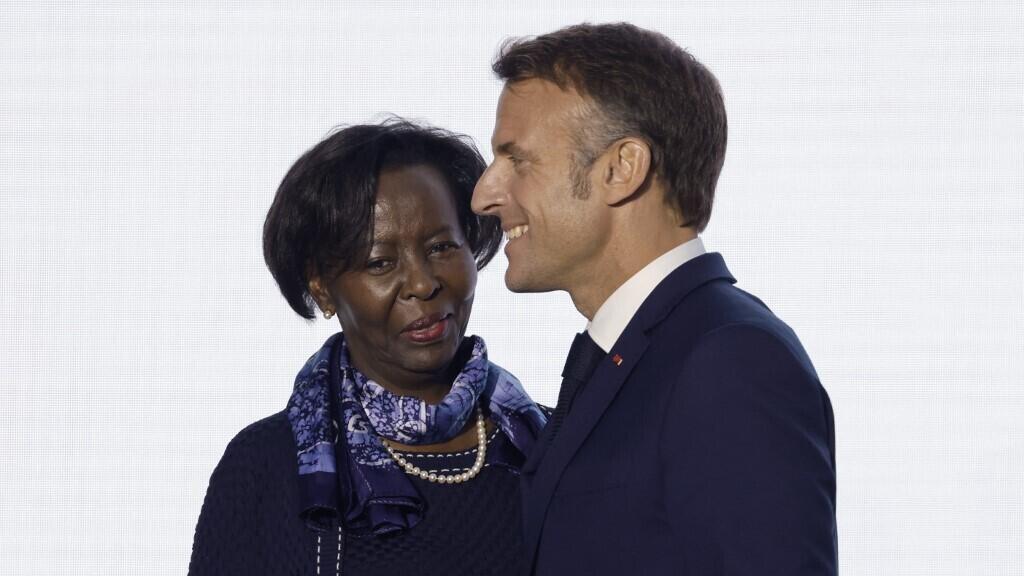
Tensions between the Democratic Republic of Congo and Rwanda have intensified over the upcoming leadership election for the Organisation Internationale de la Francophonie (OIF), the intergovernmental organization comprising 53 French-speaking states. The dispute, which spilled over into a summit beginning in Cambodia on Sunday, has prompted French President Emmanuel Macron to intervene by requesting that Rwanda withdraw its candidate in favor of a consensus nominee ahead of a vote scheduled for Monday.
Rwanda’s Foreign Minister Olivier Nduhungirehe stated that Kigali had rejected Macron’s request, insisting on retaining its candidate, Louise Mushikiwabo, who is seeking a second term as secretary-general. In contrast, DR Congo’s Foreign Minister Therese Kayikwamba Wagner indicated that her country was prepared to withdraw its candidate, Juliana Lumumba, if Rwanda made a similar move to facilitate unity. Lumumba is the daughter of Patrice Lumumba, a national hero in the DRC.
The diplomatic standoff mirrors broader cross-border hostilities between the two neighbors, with Kinshasa accusing Kigali of supporting the M23 armed group within DR Congo. Several sources reported that DR Congo has threatened to leave the Francophonie organization entirely if Mushikiwabo is re-elected on Monday. Macron, who arrived in Phnom Penh on Saturday, emphasized the need for member states to work toward a compromise to prevent a schism within the French-speaking community.

Threatening to leave the organization just to win a leadership race feels like an extreme diplomatic move.
The mention of M23 in a cultural election reminds us that nothing happens in a political vacuum.
Does the French government really have the authority to tell Rwanda which candidate to pick for this organization?
I did not expect Cambodia to be the stage for this intense political drama between neighbors.
It is sad that regional conflicts now dictate diplomatic alliances. We need a truly neutral candidate for this role.