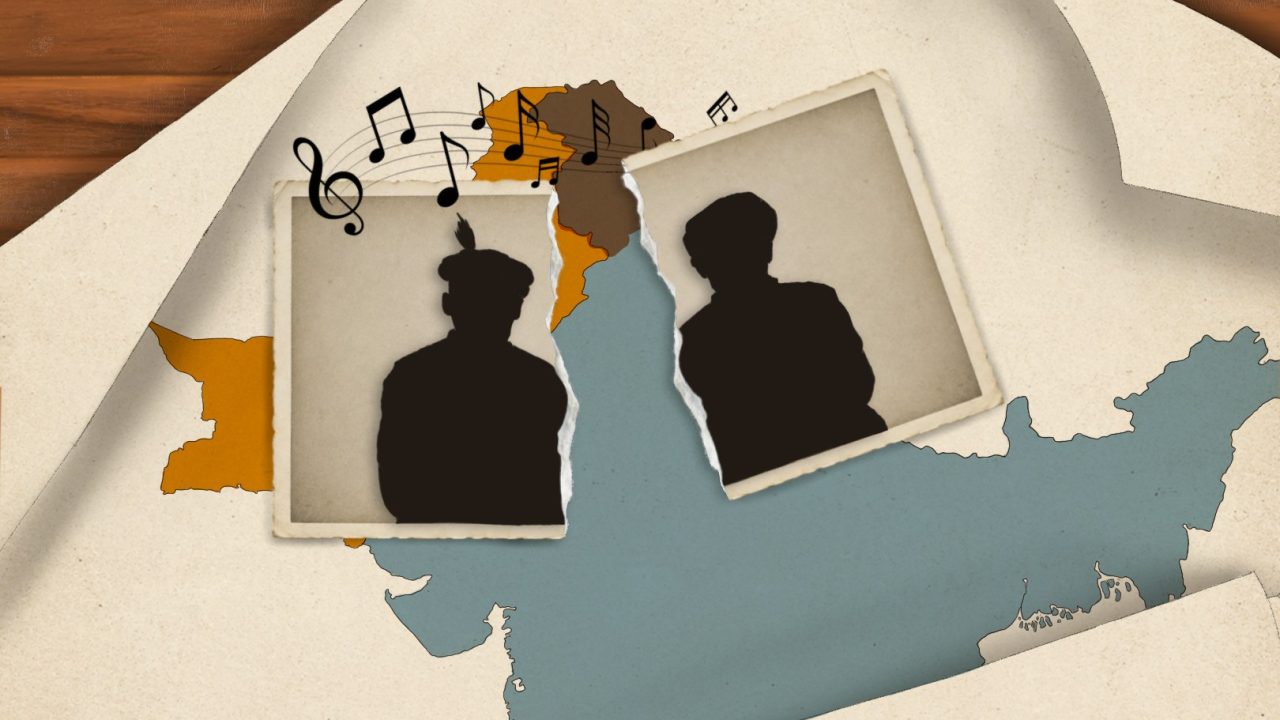
A new generation of Shina musicians is using their art to transcend political boundaries, connecting communities separated by the Line of Control (LoC) in the disputed Kashmir region. While the area is politically divided between Pakistani-administered Gilgit-Baltistan and Indian-administered Jammu and Kashmir, cultural and ethnic ties remain strong, particularly among Shina speakers.
Salman Paras, a 38-year-old contemporary Shina folk singer from Sheikhpora Kilshay in Astore district, Pakistan-administered Gilgit-Baltistan, describes this dynamic by stating that while they are politically divided, their hearts beat together musically. Paras grew up hearing stories of families who were split when the region was partitioned, including a paternal uncle who remained in Gurez, a valley on the Indian-administered side, while the rest of the family migrated to Gilgit.
Years later, a Shina musician on the Kashmir side contacted Paras after discovering his songs on YouTube. The musician identified Paras’s relatives through their shared ethnic ties, tracing them to Kangan, a town in central Kashmir where many Dard families migrated from Tulail. Although the families have not yet reconnected and the musician’s identity has not been disclosed for security reasons, the incident highlights how music is serving as a tool for preserving family lineage across the border.
Paras, who blends Shina folk with modern pop, has gained a significant following through collaborations and digital presence. His song “Karay Karay,” recorded with Pakistani singer Ali Zafar and filmed during the cherry blossom season in Skardu and the nearby Katpana Desert, has been viewed millions of times on YouTube. The collaboration helped legitimize his work, leading to recent performances in Dubai and Muscat.
During a live Instagram session on November 3, Paras sang in Shina and its regional varieties, attracting listeners from Gurez, Drass, Kargil, and Gilgit-Baltistan. Imtiyaz Samoon, a Shina speaker from Gurez on the Indian-administered side, expressed that Paras’s music is deeply loved locally and frequently performed at community gatherings. Paras expressed his desire to collaborate with musicians on the other side and perform in Gurez and Ladakh, provided that necessary permissions and visas could be arranged.
“If you look at the official map of Gilgit-Baltistan today, Gurez and Ladakh are missing,” Paras said, referring to Shina-speaking areas on the Indian-administered side. “But in my mind, I’ve drawn a cultural map that includes Chitral, Kohistan, Gurez and Ladakh. They are my people.”
The movement is also inspiring younger artists like Iftikhar Uddin Iftikhar, a 29-year-old singer based in Gilgit. Iftikhar began learning music in 2015 under Shina folk singer Muhammad Amin Shah and released his first Shina album in 2018. He now notes that he has friends across the border, including Shina speakers in Kashmir and Ladakh who listen to his work. For Iftikhar, the goal extends beyond entertainment; he views his music as a means to preserve identity, stating, “I am not just promoting songs – I am keeping our language alive.”

Preserving the language through music is a brilliant strategy. It keeps the identity alive even when political borders try to suppress it.
Surprised how effective YouTube is at bridging this specific divide. Digital tools are definitely changing how communities stay connected.
Really hoping these visa issues get sorted out soon. It would be amazing to see them finally perform together in person.
The quote about drawing a cultural map is heartbreaking. We are more alike than different, yet walls stand between us.