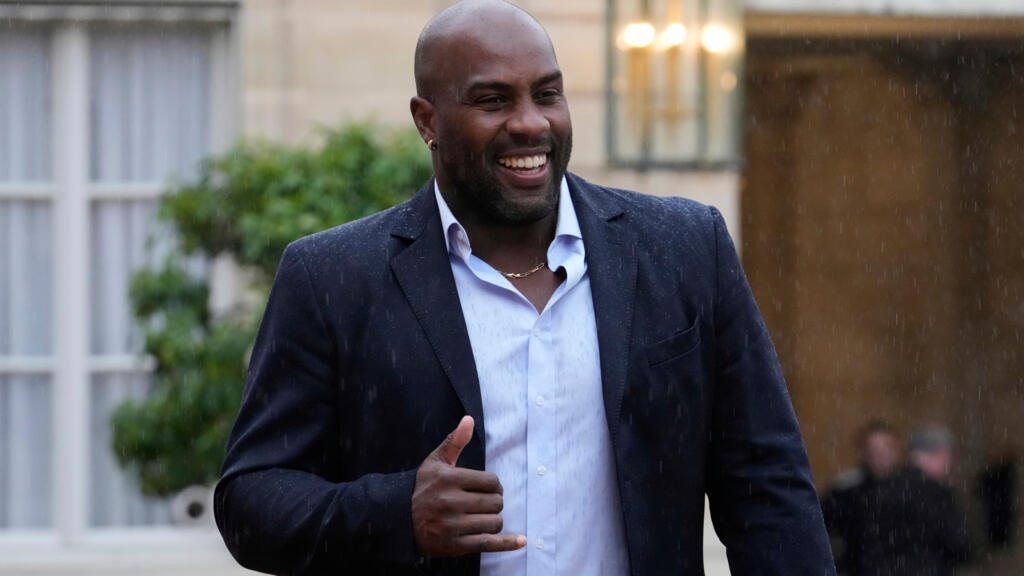
French judo star Teddy Riner’s recent announcement that he will contest next year’s presidential election has met with some skepticism, yet he follows in the footsteps of several other athletes who transitioned from the sports arena to high office. Their experiences serve as a compelling backdrop for Riner’s political aspirations.
Pakistani cricket legend Imran Khan, who led his nation to a 1992 World Cup victory, utilized his fame and prize money to establish a cancer hospital named after his late mother. Despite his Oxford education and charismatic persona, Khan’s political career has been turbulent. Elected as a member of parliament in 2002 and serving as prime minister from 2018 to 2022, he survived an assassination attempt in November of that year. He has been incarcerated since August 2023 on charges including corruption and inciting violence, which he claims are politically motivated. At 74, he continues to receive support from former cricket captains and intellectuals who call for his release.
Conversely, Liberian football icon George Weah found significant success on the political stage. After winning the Ballon d’Or in 1995, Weah entered Liberian politics following two civil wars. Initially mocked for his inexperience in a 2005 bid, he was elected to the Senate in 2014, defeating the president’s son. Weah then won the presidency in 2017 but lost a narrow re-election bid in 2022 to Joseph Boakai. Facing accusations of corruption during his term, Weah conceded defeat with grace.
Philippine boxing legend Manny Pacquiao, the first fighter to hold world titles in four different weight classes, successfully balanced his sporting career with public service. Elected to the House of Representatives in 2010, he faced criticism for absences but was later elected to the Senate in 2016. Although he supported the restoration of capital punishment, his 2022 presidential bid ended with a third-place finish. President Ferdinand Marcos Jr. subsequently appointed Pacquiao to the Anti-Poverty Commission, a role Pacquiao accepted by citing his own history of poverty.
These varied outcomes—from imprisonment to successful terms of office—illustrate the complex realities facing sports figures who enter the political realm, a path now being explored by Teddy Riner.
Leave a Reply