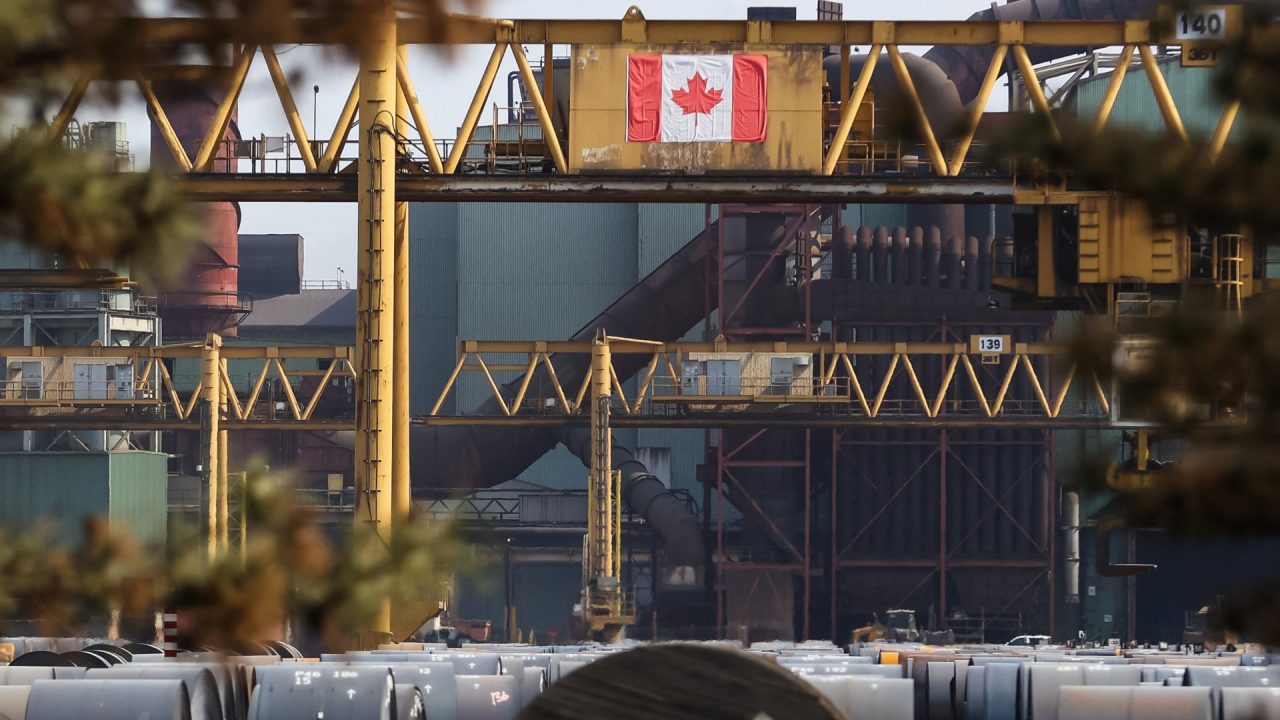
The Canadian government is threatening legal action against Cleveland-Cliffs, the US parent company of Stelco, alleging that the firm broke promises made during its 2024 acquisition of the steelmaker. Tensions escalated after Cleveland-Cliffs announced temporary shutdowns in Hamilton and Nanticoke, Ontario, resulting in layoff notices for 175 workers at the Hamilton plant, with potential impacts extending to 500 employees across both sites.
Cleveland-Cliffs attributes the operational cuts to the impact of US tariffs imposed by President Donald Trump, which the company claims have reduced demand for Canadian steel in the American market, alongside competition from cheaper foreign imports. However, union officials and government representatives argue the situation is more complex. Ron Wells, president of United Steelworkers Local 1005, stated that the company is using difficult market conditions to serve its own interests, effectively using Canadian workers as pawns.
Canadian Industry Minister Melanie Joly highlighted the company’s strong financial performance, noting that CEO Lourenco Goncalves reported Stelco’s strongest quarter since the acquisition. “Mr Goncalves is not a victim… He’s never made so much money,” Joly said. The government gave Cleveland-Cliffs a 15-day deadline from October 22 to honour its commitments to Canadian workers, including maintaining employment levels and advocating for trade policies that benefit the Canadian steel industry. When that deadline expired on November 6, Joly requested that Canada’s Competition Bureau investigate whether the 2024 acquisition negotiations were conducted in bad faith.
Critics also point to contradictions in Goncalves’ public stance. While he argues for stronger protections against foreign steel imports in Canada, he has been a vocal supporter of Trump’s 50 percent steel tariffs on Canadian imports. In testimony to US lawmakers, Goncalves argued that Canada should not be exempted from these tariffs, stating in a previous interview that he had “his fingerprints on that 50 percent.” Economic experts suggest this strategy allows Cleveland-Cliffs to seal off domestic markets in both countries, benefiting its separate US and Canadian operations.
During a CBC interview, Goncalves acknowledged buying Stelco because he could not afford “Stelco flooding the market here in the United States to the detriment of my own company.” Joly indicated these comments could strengthen the government’s case for a forced sale of Canadian assets if it is proven that the acquisition was intended to keep Canadian operations idle. Cleveland-Cliffs maintains it has complied with its obligations under the Investment Canada Act and has expressed hope to recall laid-off workers before Christmas, contingent on Canadian customers buying domestic steel.
Workers like Chelsey Masteij, a Stelco employee laid off in October, are facing uncertainty. Masteij, who had hoped to retire after her career at the plant, is now utilizing employment insurance while considering retraining in heavy equipment. Union representatives note that many long-term employees are struggling with the transition to the digital job market or contemplating moving to western Canada to find work, a decision that poses significant challenges to their family lives.


Will the Competition Bureau actually find anything? These cases can drag on for years and years.
They used the tough market as a cover for their own financial gains. Classic corporate move.
Hope they can find jobs in the West, but moving your whole family is such a heavy burden.
The tariff angle is actually quite complicated. It is not just simple politics, there are real supply chain issues.
I bet they will wait until after the election to decide if they honor the deadline or not.
I spent 30 years at the mill. It is heartbreaking to see these younger folks lose their livelihoods like this.
Joly saying the CEO made his best quarter ever really puts the nail in the coffin for their excuse.
The double-dip strategy is genius for the company, terrible for Canada. They block imports and then close plants.
Does anyone actually think forcing a sale helps the workers? The industry is struggling globally, not just locally.
My brother works there. Seeing him laid off while the CEO makes bank is just wrong and infuriating.