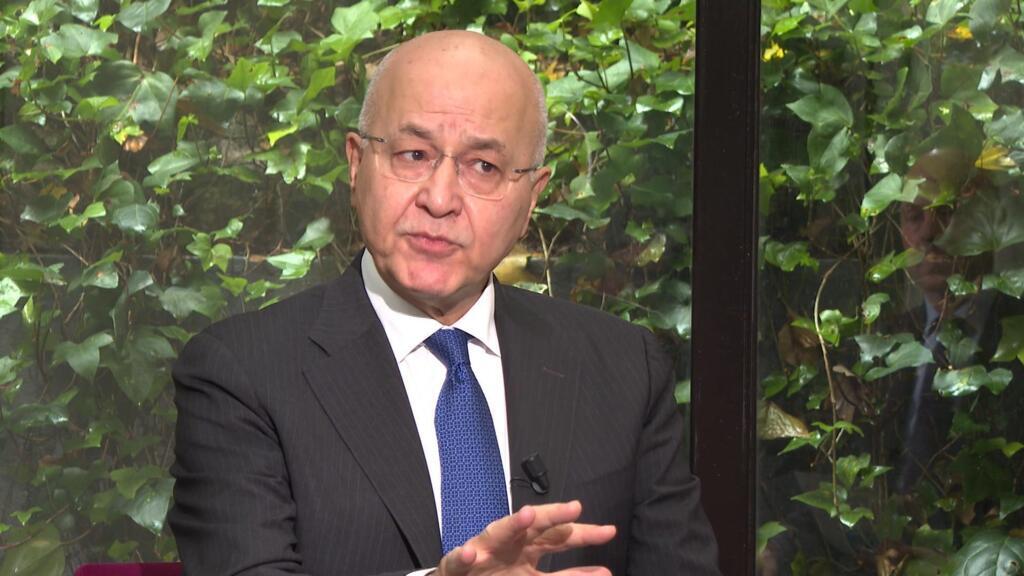
Barham Salih, the head of the UN refugee agency UNHCR, has described the ongoing conflict in Sudan as “shameful” and is pressing international leaders to find a political resolution. In a recent interview with France 24, the former Iraqi president expressed deep concern over the humanitarian crisis, noting that the war, now entering its fourth year, has forced millions to flee and resulted in hundreds of thousands of deaths and injuries.
Salih emphasized the moral urgency of the situation, stating that such atrocities occurring in the 21st century are “really embarrassing.” He called on the global community to end the conflict, which he described as a source of immense trauma for those affected.
During the interview, the UN chief also addressed the severe consequences of reduced international funding. He indicated that the US withdrawal of financial support has had a “drastic” impact on UNHCR’s operations, although he noted that the European Union has increased its contributions to the agency. Salih explained that these budget cuts have forced the organization to drastically reduce essential services for displaced populations.
Specific examples of these constraints include the town of Adré in Chad, where the agency currently provides only eight liters of water per person per day. Additionally, in Gambela, Ethiopia, a community of approximately 60,000 refugees has access to just one doctor. Salih deemed these conditions unacceptable and argued that efficiency measures have their limits when it comes to the basic needs of those in dire situations.
Furthermore, Salih defended the integrity of the global asylum system, which he said is currently under threat from a “politicised and even weaponised” debate. He clarified that asylum is not in competition with immigration control, arguing that the two areas are actually complementary. Salih, who took over UNHCR in January, was himself a refugee before becoming a prominent political figure in Iraq.

One doctor for sixty thousand people is absolutely tragic. This is a complete breakdown of basic care.
Salih having been a refugee himself makes his perspective on these moral failures much more powerful.
Weaponizing asylum debates really hurts the people who need protection most. We need to separate immigration and asylum.
It is genuinely shocking that such a humanitarian crisis is still ongoing after four whole years.
The EU stepping up is good, but it feels like a drop in the bucket compared to the US cuts.
Eight liters of water per person sounds incredibly low. How is that even barely survivable for a whole family?