
Health Improvement Scotland (HIS) has delivered a scathing verdict on NHS Grampian, describing its latest review as the most serious it has ever conducted. The report highlights a widespread pattern of management failure that extends beyond specific incidents to affect the entire region, including significant deficiencies at Dr Gray’s Hospital in Elgin.
The watchdog identified recurring patterns of harm and a consistent inability to learn from previous mistakes, resulting in failures in recruitment, governance, and patient safety protocols. These findings have fueled a growing crisis of confidence among frontline staff, who argue that poor leadership from senior executives is being unfairly shifted to lower-level workers.
Chief executive Laura Skaife-Knight, who requested the review, remains in the crosshairs of the inquiry. The report noted that she issued a misleading statement earlier this year regarding an investigation into a patient’s death during surgery. She initially claimed senior executives had not reviewed or signed off on the report, but later admitted that executive medical director Hugh Bishop had actually examined and discussed the document. Bishop, who cited having “no recollection” of the meeting, has since left his post. Ms. Skaife-Knight has apologized to both the watchdog and affected staff, acknowledging the significant distress caused by the misinformation.
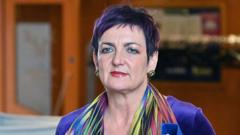
Despite the severity of the findings, Scottish Health Secretary Angela Constance stated that she maintains her confidence in Ms. Skaife-Knight, citing her candor and willingness to accept responsibility for errors. Ms. Constance noted that nearly half of the health board’s leadership has already changed and that a new chairperson is preparing to take over with the mandate to hold senior figures accountable. She is scheduled to update parliament next week on the government’s further actions.
NHS Grampian is already under special measures due to financial difficulties, making further regulatory escalation likely. The situation at NHS Grampian reflects broader concerns across Scotland’s health services. In Glasgow, emergency medicine consultants recently warned of “whole-system failure” at the Queen Elizabeth University Hospital, while the chief executive of NHS Ayrshire and Arran resigned earlier this year following a near-collapse of the trust’s finances. These events coincide with government plans announced in September to reduce the number of health boards from 14 to two, raising questions about whether structural changes can improve accountability for the country’s highly paid NHS leaders.


Frontline staff taking the blame for executive errors is the most infuriating part of this whole systemic collapse.
Is reducing the boards to two actually going to fix this? I worry it will just make accountability even harder to find.
The bit about the misleading statement is truly disgusting. You cannot trust an executive who lies to a watchdog about patient safety.
Why are we still funding the same leadership structure? It seems like throwing good money after bad with these repeated failures.
HIS calling this the most serious review is shocking. My cousin works there and says morale is at an all time low.