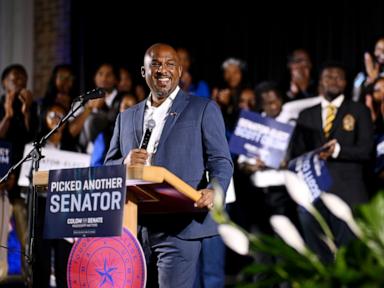
Scott Colom’s narrow victory in the Mississippi Senate race has challenged the assumption that the state’s political outcomes are fixed, offering a potential new path for future candidates and organizers. The Democrat defeated incumbent Republican Cindy Hyde-Smith in a close contest that took more than a week to officially certify.
The win is historically significant for the first time, Mississippi voters have directly elected a Black person to the U.S. Senate since the Reconstruction era. This breaks a gap of nearly a century and a half, which existed after Blanche Kelso Bruce, one of the state’s first two Black senators, left office in 1881. The original exclusion of Black legislators and voters was solidified by the Mississippi Constitution of 1890 through mechanisms like poll taxes and literacy requirements.
Speaking at a victory rally at Tougaloo College on November 11, Colom reflected on the moment with his wife and daughters by his side. “I had the courage to believe in Mississippi,” Colom told supporters, emphasizing a commitment to faith and continuous prayer as he works to improve the lives of all residents.
While this victory represents a breakthrough for Black Mississippians, whose voting rights were long obstructed, it is unclear whether it signals a lasting political realignment. The durability of the coalition that elected Colom will be the ultimate test, requiring sustained voter participation and competitiveness in future elections.
Colom campaigned on a platform focused on raising wages, protecting rural hospitals, and addressing the high cost of living. These priorities now set the standards for his legislative work, where he will share the same authority as other senators on matters including judicial nominations. His ability to deliver on these promises to all Mississippian communities will determine whether the state views this election as a new, viable pathway for statewide office.


Took the courage to believe? Bold words for a state that has not elected a Black senator since 1881.
His platform sounds reasonable, but will the rural voters keep showing up next time? We will see.
Finally! One hundred and forty years is a long time. The history books are being updated tonight.
The certification delay is wild. Why does it take weeks to count votes? Democracy feels fragile in that state.
Honestly surprised this went either way. Mississippi politics rarely surprise anyone, so this feels like a massive shift.