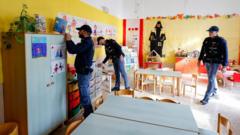
Schools across Italy received bomb threats for the second consecutive day on Thursday, resulting in limited evacuations as authorities sought to maintain calm despite the recurring false alarms.
According to official figures, 3,778 schools across the country, ranging from northern Milan to southern Sicily, reported receiving similar threats. In response, only 77 schools were evacuated on Thursday, a significant reduction compared to the widespread disruptions seen on Wednesday.
The Italian government has issued specific guidance to educational institutions, advising that buildings should not be evacuated solely based on the receipt of mass emails without concrete evidence of danger. Prime Minister Giorgia Meloni stated that the government is preparing sector-specific advice to assist schools in managing such threats effectively.
While no explosive devices have been discovered during searches by bomb squads, the nature of the threats remains a source of concern. The Wednesday email, which reached 6,300 of Italy’s 7,476 state schools, was signed by an individual identifying as ‘Mikhail Andropov, leader of Vilayat di Misoginistan.’ Officials indicated that this message likely originated in Taiwan.
A similar message sent on Thursday, bearing the same signature, is believed to have been transmitted through a hacked account belonging to a teacher in the Philippines. Although a Russian extremist group initially claimed responsibility for various hoax threats across Europe, it has since denied any link to these specific false warnings.
The incidents in Italy have drawn parallels to threats received by schools in Scotland and Northern Ireland on Wednesday, though it remains unclear if these events are connected. Additionally, a separate bomb alert at a Calais rail station on Thursday morning caused delays to international and national train services in northern France.
Public reaction has been mixed, with some parents demanding clearer government action. Protests erupted in Rome against a headmaster’s decision not to evacuate her school, citing typos in the threatening message as proof of its inauthenticity. La Repubblica reported that demonstrators are calling for the issuance of new national guidelines to standardize the response to such cyber threats.



Honestly, the protesters were right. Not evacuating when the email looked so fake was the smart call.
My kids stayed home again today. It is exhausting dealing with this constant uncertainty and the wasted time.
Wait, a hacked account in the Philippines? That seems way too specific to be a coincidence. Who is really doing this?
It is scary how easily these threats disrupt education. We need better security protocols for all schools nationwide.
I hope the government stops treating these emails like real threats. The typos were obvious to everyone in my school.