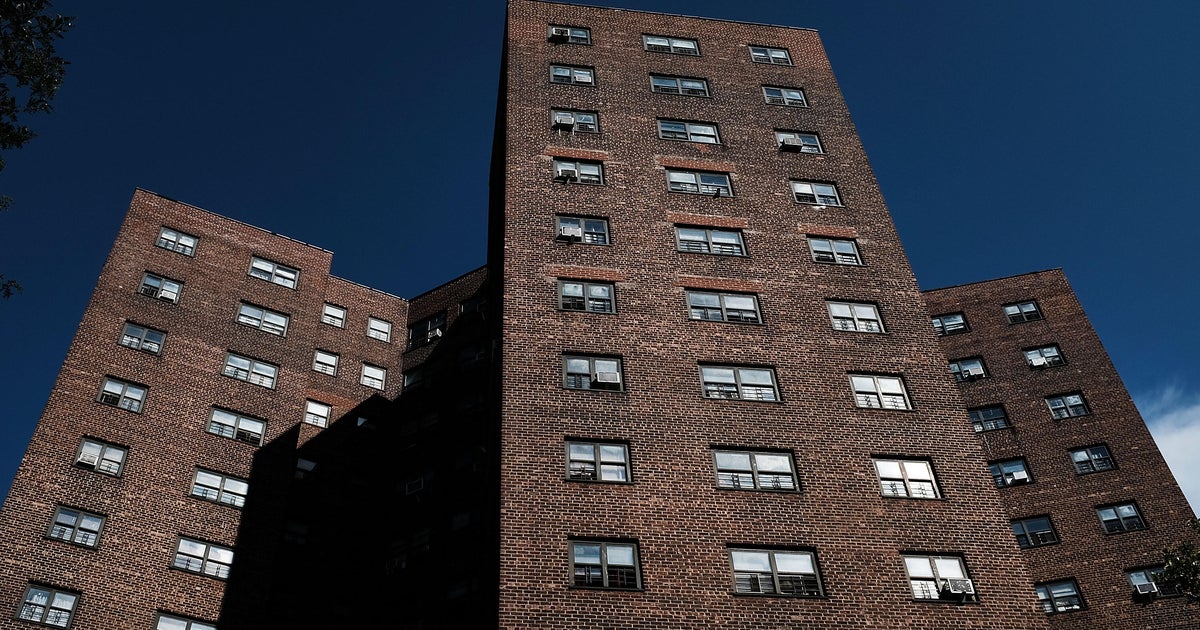
The U.S. Department of Housing and Urban Development (HUD) has finalized a rule requiring residents of federally funded public housing to provide evidence of U.S. citizenship or eligible immigration status. The measure, published in the Federal Register on Thursday, Nov. 12, 2026, is set to take effect on Dec. 14 and has drawn sharp criticism from policy experts who warn it could destabilize thousands of households.
According to data from the nonpartisan Center for Budget and Policy Priorities (CBPP), the new policy could displace approximately 80,000 individuals across all 50 states. This figure includes roughly 37,000 children, the majority of whom are U.S. citizens. The rule is expected to disproportionately impact mixed-status families—households where some members are citizens or have legal status while others do not—who have been permitted to live together in HUD-funded units since 1995.
Marie Claire Tran-Leung, director of the Evictions Initiative Project at the National Housing Law Project, warned that the regulation threatens to “tear apart families and sow division.” Under the previous policy, subsidies were prorated so that only eligible members received financial aid, but the family remained in the unit. Now, these households may be forced to leave public housing or separate to avoid losing residency rights. Experts note that mixed-status households often paid a higher share of their rent, and their departure could result in financial shortfalls for HUD.
HUD Secretary Scott Turner defended the decision in a statement, asserting that the era of “ineligible noncitizens” exploiting government welfare programs is ending. Turner cited a recent audit that identified nearly 200,000 tenants with incomplete or unverified eligibility status, emphasizing that American veterans, the elderly, and victims of domestic violence remain on long waitlists while the current system is being “scammed” by ineligible residents.
The impact of the rule will be most concentrated in New York, California, and Texas. A coalition of 22 state attorneys general previously opposed the regulation, arguing in a letter that it would inflict significant economic costs on states and worsen the existing affordable housing crisis. In California alone, more than 7,000 mixed-status households are expected to be affected, while New York faces impacts on approximately 2,500 such households.
The rule is not the first attempt to change this provision. During the first Trump administration in 2019, HUD proposed similar revisions, but the plan was withdrawn in 2021. The agency reintroduced the proposal in February 2026, receiving over 11,000 public comments from individuals, advocacy groups, and members of Congress during the three-month comment period. Public response has been mixed, with some commenters urging the government to withdraw the proposal to preserve family stability, while others supported stricter enforcement of eligibility requirements.

Funny how they call it ‘scams’ when it’s just families trying to keep a roof over their heads.
The financial shortfalls for HUD are going to be massive if these paying tenants are forced to leave immediately.
I’m skeptical that verifying status will actually solve the housing crisis, or is it just a political stunt?
Twelve thousand comments and they just ignore the human cost? It feels completely tone-deaf to me.
The waitlists for veterans are long, I get it, but this is a blunt instrument that hurts everyone.
Has anyone looked into how much the local states are actually losing in tax revenue from these tenants?
I understand the frustration, but tearing apart families just to save money is a terrible approach to housing policy.
Eighty thousand people displaced? That seems incredibly high, especially considering so many of them are actually American citizens.