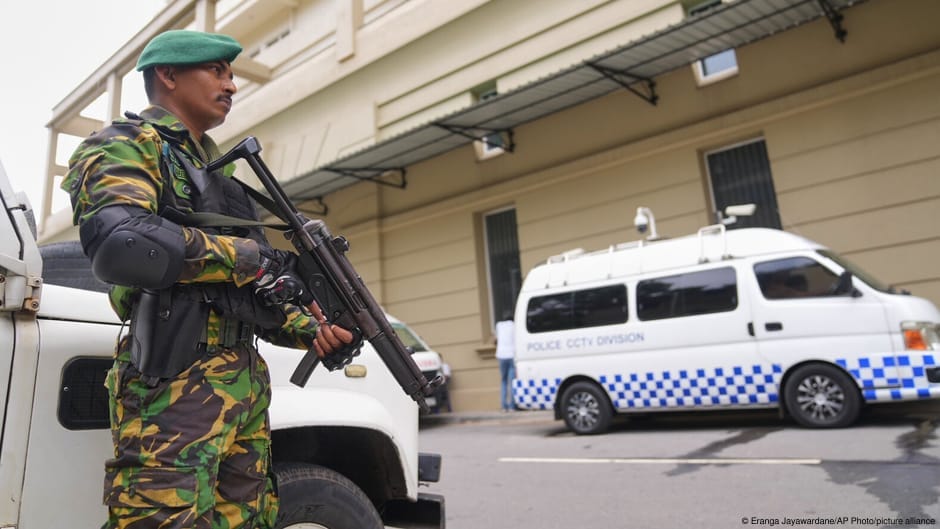
Sri Lankan human rights organizations are raising alarms over a proposed counterterrorism bill, arguing that the legislation risks undermining fundamental freedoms and mirrors the flaws of the existing law it seeks to replace. The Sri Lankan government, led by President Anura Kumara Dissanayake and his National People’s Power faction, is pushing for the Protection of the State from Terrorism Act (PSTA) to supersede the Prevention of Terrorism Act (PTA). While authorities argue that robust legal frameworks are necessary to counter evolving threats from extremist groups, critics contend the new draft offers limited improvements and poses significant risks to civil liberties.
The debate has heightened emotions among those affected by the 2019 Easter Sunday attacks, which remain the deadliest in the country since the end of the civil war in 2009. Ganesan, a 46-year-old resident of Batticaloa who lost his two-year-old daughter in the coordinated bombings that killed 270 people, expressed skepticism regarding the new legislation. Although he acknowledges the need for laws to prevent terrorism, he emphasized that such measures must not target innocent individuals or suppress human rights.
Legal experts and activists have pointed out that the PSTA draft contains an overly broad and undefined term for ‘terrorism,’ creating ambiguity that could lead to violations of fundamental rights. Visakesa Chandrasekaram, a film director and human rights lawyer, warned that the bill’s lack of clarity and its delegation of police powers to the military could lead to the militarization of law enforcement processes. The military is not trained for criminal investigations nor equipped to protect the rights of individuals targeted by such probes, he noted.
Dhanushka Silva, a lawyer, argued that the new bill is essentially a replica of the PTA, which the government had pledged to repeal in its 2024 election manifesto. He highlighted specific concerns regarding Section 9 of the PSTA, which could subject social media posts and statements to scrutiny under the broad definition of terrorism-related offenses. Silva warned that individuals sharing content deemed an offense could face up to 15 years of rigorous imprisonment, describing the provision as a significant blow to freedom of speech in a democratic society.
International bodies have also weighed in, with the Office of the United Nations High Commissioner for Human Rights (OHCHR) urging the government to ensure the bill aligns with international human rights standards. The OHCHR stated that while the PSTA includes some safeguards not present in previous drafts, it reproduces shortcomings from older counter-terrorism legislation. The organization emphasized the need for robust protections against torture, ill-treatment, enforced disappearance, and coercive interrogation.
In response to these criticisms, government spokesperson Nalinda Jayatissa dismissed the allegations made by rights activists. He insisted that the new law would not compromise civil liberties or press freedom, maintaining that the legislation is a necessary step in addressing complex security challenges.
I hope the public pressure forces them to actually listen to the legal experts this time.
Is anyone actually reading the new sections carefully? The definitions of terrorism are still way too vague.
The UN report is very clear about the flaws. Ignoring it is a mistake for the country.
Why did they promise to repeal the PTA only to replace it with something nearly identical?
The military doing criminal investigations is a recipe for disaster. They are not trained for that.
We need strong laws, but not at the cost of our basic democratic rights and freedom of speech.
Did not expect the new government to push something this similar to the old PTA bill.
Fifteen years for a social media post? That is absolutely absurd and totally unworkable in modern times.
It is heartbreaking that they still ignore the families of the 2019 victims. Security must never mean silence.