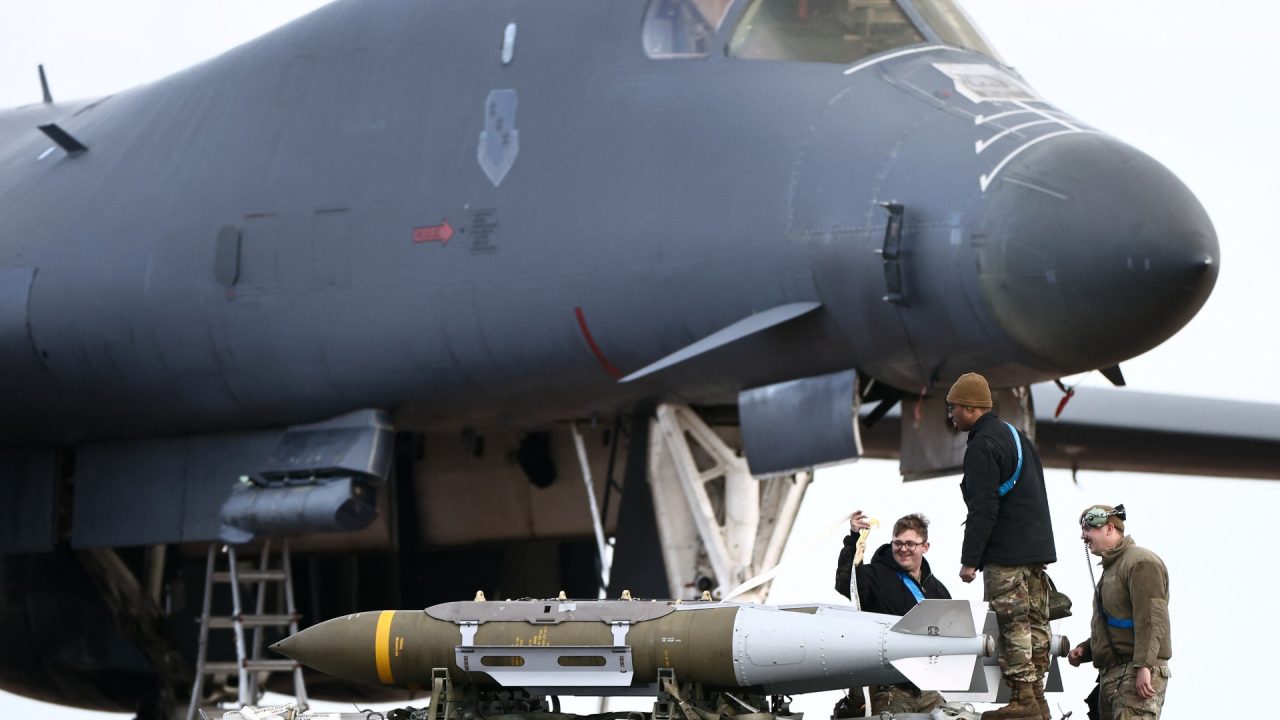
The United States is relocating military assets from bases in the United Kingdom and the Gulf in response to the growing threat posed by Iran. In March 1999, RAF Fairford in Gloucestershire served as a key launchpad for the NATO bombing of Yugoslavia, but the base’s role has evolved significantly. This month, the US withdrew 12 B-1 Lancer bombers from RAF Fairford amid concerns that the base was no longer safe from Iranian retaliation. British authorities recently made arrests related to an alleged plot to target the facility, a charge that Tehran has denied. Similar withdrawals have occurred at RAF Mildenhall, and US assets in the Gulf are being moved to Jordan or Israel due to damage sustained during the recent conflict with Iran.
For decades, US overseas bases have functioned as the primary tools for projecting American power and providing security guarantees to allies in Europe and the Middle East. However, the ability of Iran to strike these facilities has transformed them from strategic assets into potential liabilities. Simon Mabon, a professor of international politics at Lancaster University, described the US security umbrella as a “double-edged sword,” noting that the vulnerability of these bases is altering Washington’s strategic calculations and raising questions among European and Gulf states about the benefits of hosting American forces.
Security incidents linked to the war on Iran are straining the traditional security arrangements with allies. US prosecutors have charged three men with plotting attacks on bases in the US and Europe, including RAF Fairford. In the Gulf, Iran cited the presence of US military facilities as justification for bombing neighboring countries, including Qatar, the United Arab Emirates, Saudi Arabia, Bahrain, and Kuwait. A report from the Pentagon’s watchdog revealed that Iranian attacks damaged hundreds of structures at US installations in eight countries during the first four months of the conflict. The war has also disrupted regional oil and gas exports, further complicating the strategic landscape.
Analysts argue that the vulnerability of these assets is now a central concern for host governments who did not initiate the conflict but are bearing its consequences. Mohammad Ali Shabani, a Middle East analyst, stated that the perception among Gulf Arab states is shifting as the risk of hosting bases outweighs the assumed security benefits. Washington faces a dilemma: while bases in the region provide reach for military operations, their presence offers Iran a list of targets. In March, an Iranian drone struck a hangar at a British base in Cyprus used by US forces, and Tehran threatened Bulgaria after the country allowed the US to use its Bezmer airbase. In response, US air tankers permanently left the Bulgarian facility.
The damage to key US bases in the Middle East is extensive, with several installations rendered partially unusable. In Kuwait, attacks on the Port of Shuaiba killed six US service members and destroyed an operations center, while strikes on Ali Al Salem and Camp Buehring damaged critical aviation and maintenance facilities. In Qatar, an Iranian strike damaged the early warning radar system at Al Udeid airbase, and in Bahrain, a drone hit communications equipment at the US Fifth Fleet headquarters. Gerd Nonneman, a professor at Georgetown University in Qatar, noted that the war demonstrated that some bases are too vulnerable to fulfill their original tasks effectively.
Mark Hilborne, a senior lecturer at King’s College London, highlighted that advances in drone technology have made large bases easier to target. Iran has invested in cheap, domestically produced drones that can inflict significant damage while forcing opponents to use expensive interceptor missiles. In the UK, the threat landscape has changed, with researchers from the Royal United Services Institute noting that the ability of various actors to manufacture drones makes attacks harder to attribute. As the US considers relying more heavily on Israel as a forward base, experts suggest that a long-term solution may involve ensuring that allied forces are capable of defending themselves, reducing the strategic exposure of American personnel and infrastructure.

So the security umbrella is now a double-edged sword? I always wondered how long that metaphor would last.
Cheap drones killing expensive interceptors. That math is going to bankrupt the Pentagon eventually, no matter how many bases you close.
Wait, did Iran just bomb Qatar and the UAE directly? That feels like a completely different level of conflict.
Honestly, if your bases are targets, you shouldn’t be there. Time to rethink that whole forward deployment strategy.