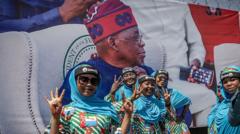
Nigerian President Bola Ahmed Tinubu has unveiled his re-election manifesto, titled “From Reform to Prosperity,” promising to achieve 6% annual economic growth by 2031 while addressing persistent security threats and housing shortages. The plan, launched by the All Progressives Congress (APC) on November 10, outlines the recruitment of 78,000 additional security personnel and the construction of 200,000 affordable homes. As the general election approaches in January 2027, the manifesto seeks to rebuild voter confidence after a first term marked by difficult economic reforms.
Tinubu’s initial administration implemented significant structural changes, including the removal of fuel subsidies and the harmonization of foreign exchange rates. While these moves were praised by international bodies such as the World Bank and the IMF for stabilizing macroeconomic indicators, they led to a sharp rise in the cost of living. Analysis by the International Centre for Investigative Reporting showed that the price of imported rice increased by 184% between May 2023 and October 2025, a burden that many families have struggled to absorb.
Despite the hardship, some indicators suggest the reforms are beginning to yield results. Nigeria’s headline inflation rate dropped to 14% in September 2026, down from a peak of 34% in 2024. Additionally, the SBM Intelligence Jollof Index recorded an 11.5% decrease in the cost of a staple meal between June and September 2026. To further ease the financial pressure on citizens, the government announced a 125 billion naira intervention package for small businesses, including grants and loans.
Challengers to Tinubu’s position are focusing on these economic realities. Former Vice-President Atiku Abubakar has criticized the removal of fuel subsidies, stating that he intends to restore them to make life more affordable. However, experts note that Nigeria’s 2026 budget, which allocates 15.8 trillion naira to debt servicing, makes a full return to subsidies fiscally difficult. Peter Obi, the Nigeria Democratic Congress candidate, has also emphasized security and national unity in his 2027 Governance Agenda, pledging to combat kidnapping and insurgent threats in the north.
The proposed expansion of security forces includes recruiting 28,000 military personnel and 50,000 police officers, but analysts warn that this alone may not resolve complex issues involving jihadist groups and herder-farmer conflicts. Tinubu’s administration also aims to boost electricity generation to 10,000 megawatts, a target that will require significant investment in a sector currently plagued by ageing infrastructure and low output. With the opposition fragmented and the incumbent party holding momentum, political experts anticipate the 2027 contest will mirror the regional dynamics of the 2023 election.
Atiku wants to restore subsidies, but the debt is too high. Realistic? Probably not, but I hope for the best.
Building houses is good, but without reliable power, they are just expensive concrete shells. Fix the grid first, please.
Wait, they actually cut inflation down to 14 percent? I never thought the reforms would stabilize things that quickly. Surprised.
Six percent growth? My rent just doubled. They dream while we suffer. This manifesto feels like a joke for the elites.