A new report from the German government’s Commissioner for Integration indicates that while progress is being made in assimilating migrants, significant obstacles remain. Natalie Pawlik, a member of the Social Democratic Party (SPD) who has held the position since last year, presented the findings in Berlin on Wednesday. She characterized the current situation as one where integration is steadily improving despite ongoing hurdles, emphasizing that residents in Germany are expected to learn the local language and abide by the law.
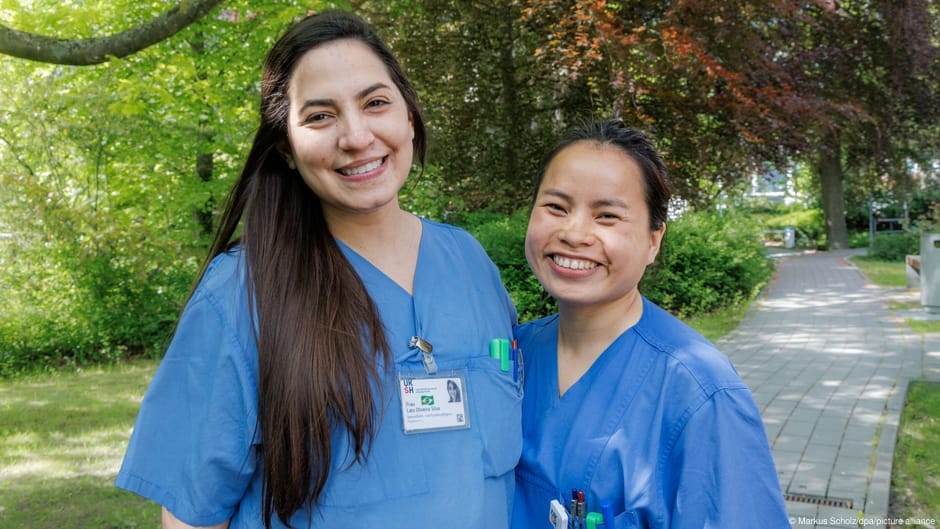
The report, prepared by a team led by Frank Kalter of the Center for Integration and Migration Research (DeZIM), utilizes official government statistics and independent studies. It notes that roughly 30% of the German population currently has some form of immigrant background. A key highlight of the data is the employment rate among immigrants, which stands at nearly 70%, exceeding rates in most other European Union nations. The sector with the most significant growth in workers without German citizenship is health and social services, where the workforce increased from 1.8 million in 2009 to 5.8 million in 2025.
However, the report also identifies specific demographic groups facing persistent difficulties. Women in immigrant households, particularly those with children and employed husbands, struggle to secure jobs; only 60% are employed compared to 88% of their German counterparts. Additionally, the data shows that young men who arrived as refugees face barriers to education and employment. Statistical analysis also reveals that while non-citizens are more likely to appear in criminal conviction statistics—accounting for 40% of convictions despite their population share—they are also more likely to be victims of crime.
Political controversy is expected over recent budgetary decisions, specifically the reduction in funding for mandatory integration courses earlier this year. Pawlik criticized these cuts, arguing that language acquisition is the foundation of successful integration. Furthermore, SPD lawmakers recently proposed a policy to grant more secure residency permits to refugees and migrants from Syria and Ukraine who have been working in the country. This proposal faces uncertain support from coalition partners, including Interior Minister Alexander Dobrindt of the CSU, who is known for holding hardline views on immigration policy.


Seventy percent employment is a solid number for the region, but we still have a long way to go for full inclusion.
Focusing only on youth barriers is important. Many young refugees are left behind while older workers find their footing in jobs.
The coalition dynamics here are messy. Watching Dobrindt react to the new residency permit proposal will be quite entertaining to follow.
Pawlik is right that language is the foundation. Without it, no amount of legal status helps anyone integrate successfully into society.
Interesting that non-citizens are also crime victims. The media rarely reports this side of the integration story.
The growth in the healthcare sector is fascinating. We definitely need those workers, but we must ensure they are properly supported.
I remain skeptical of the statistics. How can we claim progress when funding for essential support systems is actually being slashed?
Did anyone notice the specific struggles immigrant women face? The gap in employment rates is shocking and needs immediate attention from policymakers.
It is encouraging to see employment figures rising, but cutting language courses is a short-sighted move that will cost us dearly later.