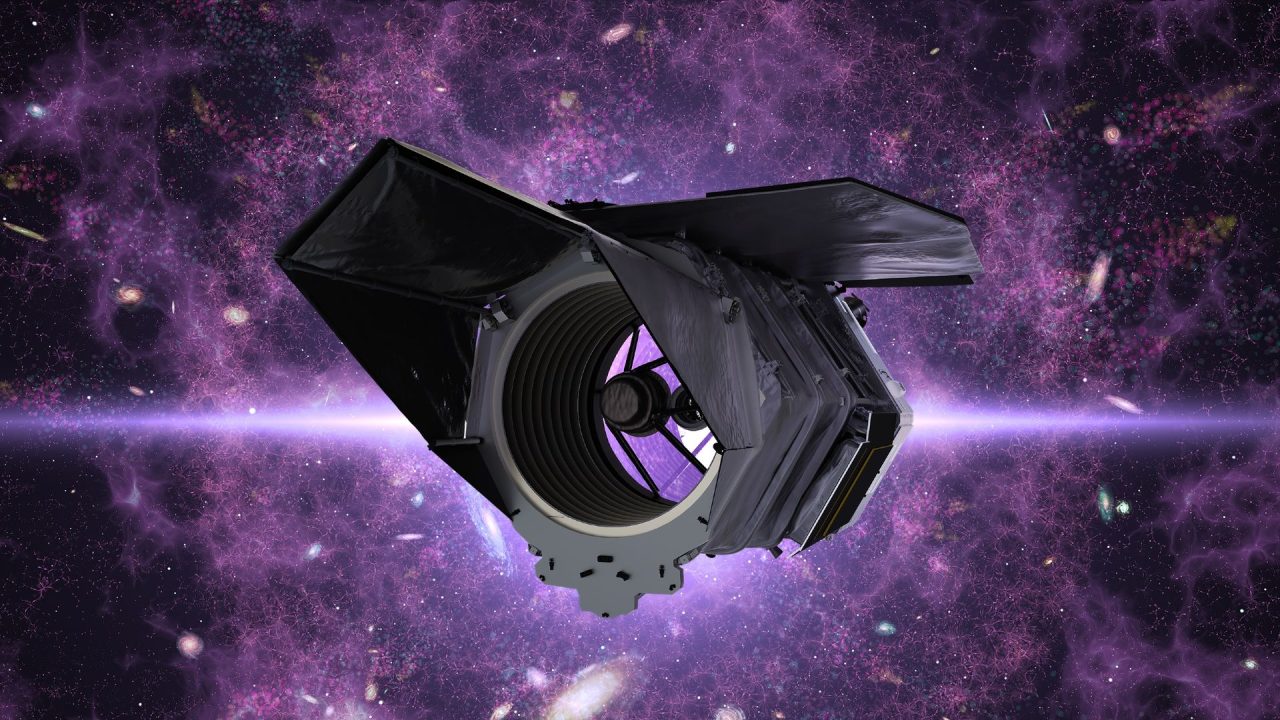
NASA’s Nancy Grace Roman Space Telescope is approaching its final orbital destination more than one million miles from Earth, with recent tests indicating the observatory will exceed its original design goals. The spacecraft, which launched on August 30 from Kennedy Space Center on a SpaceX Falcon Heavy rocket, is currently 85% of the way to Lagrange point 2 (L2). Mission scientists have discovered that Roman will capture images with approximately 30% greater detail than predicted and is equipped with enough fuel to operate for up to 12 years longer than initially planned.
The extension of the mission lifespan is attributed to two primary factors: precise rocket burns during launch that saved significant propellant, and the telescope’s lower-than-expected weight, which allowed engineers to maximize the capacity of its fuel tanks. Jamie Dunn, director of NASA’s Goddard Space Flight Center, noted that these efficiencies could allow Roman to remain active until 2048, effectively doubling its planned 10-year operational period. Alison Rao, the Roman propulsion lead at NASA Goddard, confirmed that filling the tanks to capacity due to the weight reduction provided an additional four years of fuel, on top of the four years saved by efficient burns.
In addition to the extended lifetime, post-launch adjustments to the telescope’s mirror have improved the performance of the Wide Field Instrument (WFI). Alden Jurling, a senior optical engineer at NASA Goddard, stated that the images from the WFI will be sharper than anticipated. The improvements were achieved by realigning the 7.9-foot mirror by a fraction of a hair’s width. Maxime Rizzo, a WFI systems engineer, compared the calibration process to tuning a musical instrument to ensure consistent performance. The WFI is equipped with a 288-megapixel camera and will provide a field of view roughly 100 times larger than that of the Hubble Space Telescope.
Eamonn Kerins, an astronomer at the University of Manchester who is leading one of Roman’s major surveys, expressed enthusiasm for the enhanced capabilities, noting that the telescope could potentially collect data at a rate 1,000 times faster than Hubble. “The real show-stopper results will be new things we just aren’t even thinking about right now,” Kerins said. “The possibilities are truly breathtaking.” The extended mission duration will allow astronomers to observe changes in celestial objects over decades and hunt for potentially habitable exoplanets, although improved image quality does not guarantee a higher number of new discoveries than originally estimated.
Other components of the mission are also performing as expected. The coronagraph instrument, designed to block starlight to reveal nearby planets, has passed its main commissioning phase. A global network of ground stations has established contact with the spacecraft and is ready to receive up to 1.4 terabytes of data daily. As Roman completes its journey to L2, the observatory will join other major spacecraft, including the James Webb Space Telescope and the European Space Agency’s Euclid, in orbit around this gravitational stable point.



Tuning a mirror like a musical instrument? That analogy actually makes perfect sense to me.
My son can watch it work until he’s grown up. That’s a cool thought for the future.
Hype alert. Extended lifespan doesn’t guarantee more discoveries. We need the data first, folks.
Does the sharper image quality actually mean we’ll find new black holes, or just better pictures?
Saving fuel by reducing weight is smart engineering. Glad they maxed out the tanks early on.
Wait, twelve extra years of data collection? That changes everything for long-term exoplanet studies.